
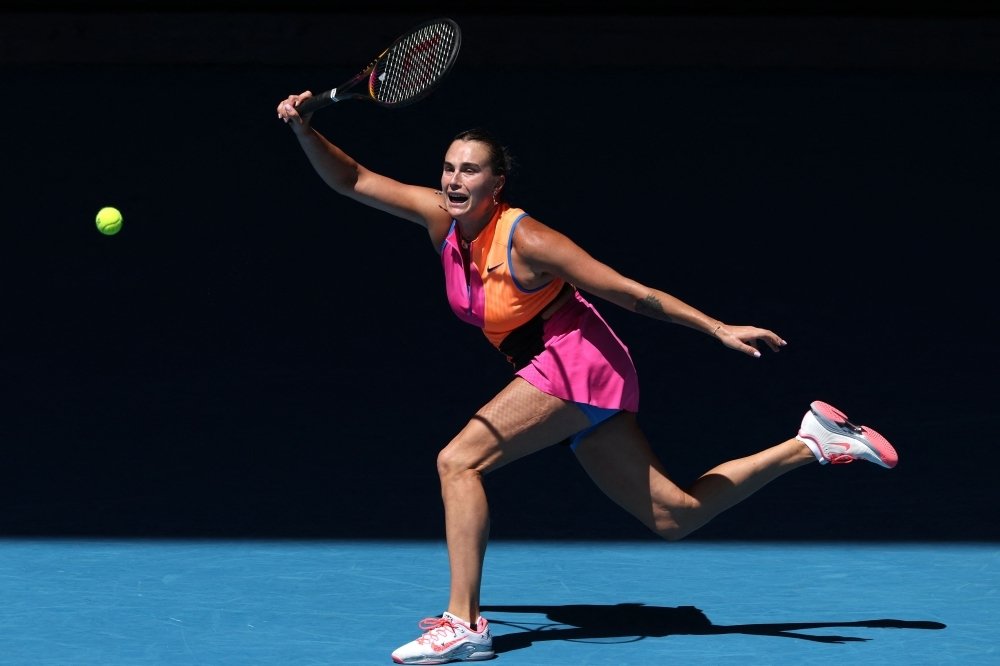
World number one Aryna Sabalenka has voiced her confusion after being asked to remove a fitness tracker during the Australian Open, questioning why devices commonly used throughout the tennis season are suddenly prohibited at Grand Slam events.
Fitness trackers have become a routine part of elite sports, helping athletes monitor health and recovery through data such as heart rate, stress levels, and physical exertion. In tennis, many players wear screenless wristbands during matches, and these devices are permitted across ATP and WTA tournaments. However, they are currently not allowed at Grand Slams.
Sabalenka said she believed she had approval to wear the device, explaining that players had received confirmation from the International Tennis Federation. According to her, the restriction at Grand Slam level came as a surprise.
She stressed that the device was not being used for competitive advantage or live analysis, but purely for health tracking. Sabalenka added that she has worn the same tracker at all WTA events throughout the year and hopes tournament organizers will reconsider the rule so players can continue monitoring their well-being.
The Belarusian star was asked to remove the tracker before her first-round match in Melbourne last week. She is not alone in facing the issue. Carlos Alcaraz and Jannik Sinner were also affected by the regulation at this year’s Australian Open.
After his fourth-round win, Sinner explained that players are interested in reviewing certain data after matches, not during play. He emphasized that the purpose is post-match analysis rather than gaining any in-game insight.
Tournament organizers confirmed that discussions are ongoing regarding the future use of such devices, but did not clarify why they remain banned for now.
At a time when athletes are increasingly vocal about mental and physical health, the debate highlights a growing gap between traditional regulations and modern sports science. For players pushing their bodies to the limit on the biggest stages, even small tools that support recovery can feel essential, not optional.