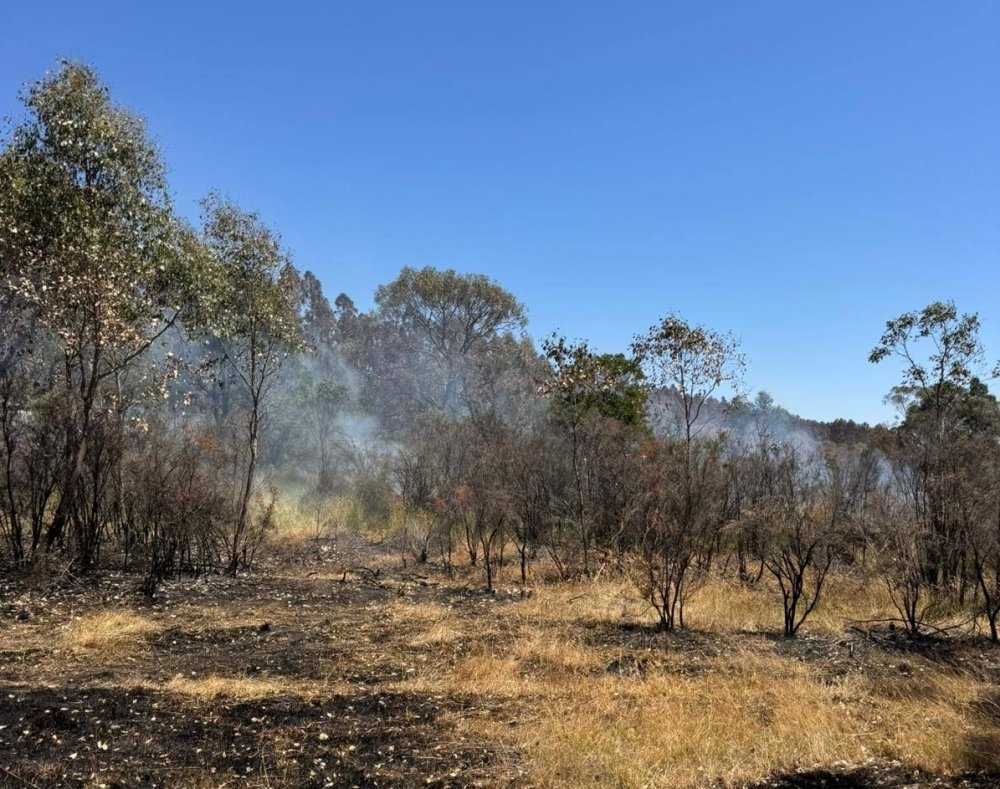
Australia is facing one of its most intense heatwaves in recent memory, with firefighters ordering urgent evacuations as out-of-control bushfires tear through parts of the southeast.
In the eastern state of Victoria, temperatures surged to record-breaking levels on Tuesday, according to preliminary data. Fire authorities warned that extreme heat combined with strengthening winds is creating highly dangerous conditions on the ground.
“Conditions are heating up across the state, and we’re seeing those 40-degree temperatures roll in,” said Country Fire Authority chief officer Jason Heffernan. He added that firefighters are already feeling the impact as rising heat and gusty winds make containment efforts increasingly difficult.
Emergency evacuation warnings were issued for hundreds of residents across four country towns in the Otways region, southwest of Melbourne. People in three nearby rural areas were also urged to leave immediately, as authorities warned that the fire could rapidly expand due to the extreme weather.
A total fire ban has been imposed across Victoria, where at least six major bushfires are currently burning. In the towns of Walpeup and Hopetoun in the state’s northwest, temperatures peaked at a staggering 48.9 degrees Celsius, narrowly surpassing Victoria’s previous record of 48.8 degrees. Officials say the reading will need further verification before being officially confirmed.
The scorching heat has also disrupted major events. At the Australian Open, organisers were forced to close the roof over the centre court to protect players and spectators, as Melbourne’s temperature was forecast to reach 45 degrees Celsius.
Hot air has settled over large parts of Victoria, South Australia and New South Wales, raising serious health concerns. Victoria’s chief health officer Caroline McElnay warned that prolonged heat can be dangerous for everyone, particularly the elderly, children and people with existing health conditions.
“Extreme heat can lead to life-threatening issues such as heat exhaustion and heat stroke, and it can also trigger heart attacks or strokes,” she said. Residents were urged to stay hydrated, keep cool and watch for warning signs including dizziness, muscle cramps, rapid heartbeat, high body temperature and loss of consciousness.
As firefighters battle the flames and communities flee for safety, the heatwave is a stark reminder of how vulnerable lives and landscapes become when extreme weather strikes. For families packing up their homes, firefighters working through exhausting conditions, and residents anxiously watching the skies, this is not just about records being broken, it is about staying alive and protecting one another in the face of an unforgiving climate.
— AFP