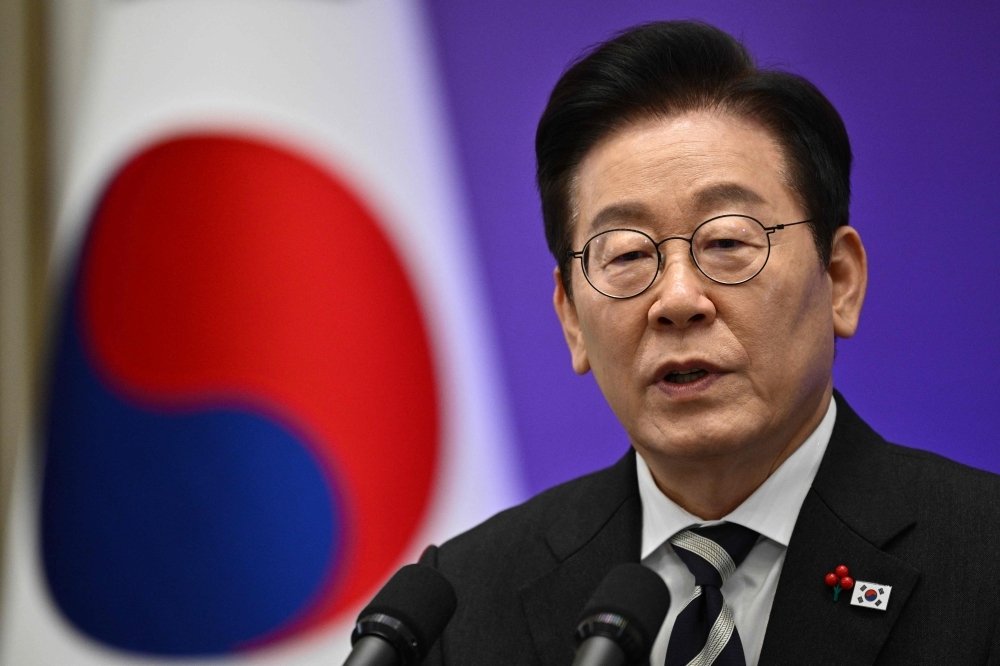
South Korean President Lee Jae Myung has called on Chinese President Xi Jinping to help bring North Korea back into dialogue and slow the momentum of its nuclear ambitions. Speaking at the end of a rare state visit to China — the first by a South Korean leader in six years — Lee said that with the right conditions, a freeze on Pyongyang’s weapons of mass destruction programs is within reach.
Lee met Xi in Beijing just a day after North Korea fired two ballistic missiles into the Sea of Japan. Wrapping up the visit in Shanghai, he shared that he had encouraged Beijing to step forward as a mediator at a time when communication between the Koreas is almost completely stalled.
He said he asked China to play “a mediating role” on Korean Peninsula issues, especially North Korea’s nuclear activities.
“We hope China can serve as a mediator — a mediator for peace,” Lee explained, emphasizing how fragile the situation has become.
According to Lee, Xi urged patience, acknowledging how strained the relationship between Seoul and Pyongyang is. Lee also reflected that past military actions may have contributed to the North’s sense of threat.
During the talks, Lee proposed a practical step forward: North Korea could freeze its nuclear program in exchange for compensation. That would mean halting new weapons production, stopping the transfer of nuclear materials, and suspending further development of intercontinental ballistic missiles.
“Even stopping where we are now would be progress,” he said — while stressing that the long-term goal of a nuclear-free Korean Peninsula must remain.
North Korea, which calls its nuclear status “irreversible,” continues to portray its weapons as essential protection against regime-change efforts. Tensions on the peninsula remain at their highest in years, and missile testing has increased as Pyongyang seeks to advance its strike capabilities.
Lee’s appeal reflects a desire to step back from the brink — and to allow diplomacy another chance before mistrust hardens into permanence.
In the end, beyond policy, weapons, and politics, this story is about people. Families divided for generations. Young people who have never known peace. Leaders who, despite disagreements, still hold the power to choose dialogue over escalation. The hope now is that someone listens — and acts — before the window for calm quietly closes.