Hundreds of people across Japan have taken an unprecedented legal step by filing a lawsuit against the central government, accusing it of failing to act decisively on climate change. The case, the first of its kind in the country, seeks compensation for what plaintiffs describe as “unconstitutional” inaction that threatens their health, livelihoods, and basic right to a stable environment.
Around 450 plaintiffs from different walks of life are involved in the landmark case. They argue that Japan’s response to the climate crisis has been grossly inadequate, leaving ordinary citizens to bear the physical, emotional, and economic consequences of rising temperatures and extreme weather.
“We have officially submitted our complaint and evidence to the court, and the lawsuit has been accepted,” said lead lawyer Akihiro Shima, confirming the formal start of the proceedings.
One of the plaintiffs, construction worker Kiichi Akiyama, shared how relentless heat has changed the reality of his work. According to him, projects now take nearly three times longer than before, resulting in significant financial losses. He also described disturbing incidents where people have collapsed while working outdoors, and in some cases, even died after returning home due to extreme heat exposure.
Climate-related lawsuits are not entirely new in Japan. In recent years, several cases have been brought against coal-fired power plants and other major emitters. However, experts and legal observers note that this is the first time a compensation claim has been filed directly against the state for its role in climate inaction.
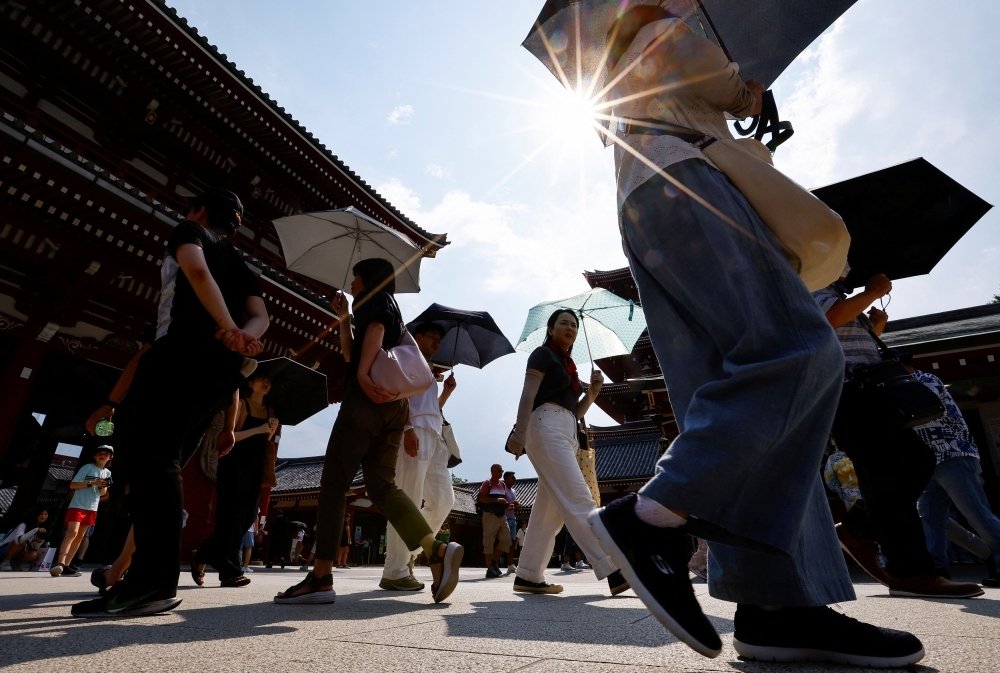
The complaint states that the government’s insufficient climate policies violate citizens’ rights to a peaceful life and to enjoy a stable climate. The urgency of the issue is underscored by the fact that Japan experienced its hottest summer on record this year, with data going back to 1898. Plaintiffs argue that repeated heatwaves are damaging crops, causing economic hardship, and increasing the risk of severe heatstroke.
Akiyama explained that working outdoors has become almost unbearable. “I can barely dig with a shovel for ten minutes without needing to sit down and rest,” he said, adding that such conditions could have been avoided if stronger policies had been implemented earlier.
Globally, similar legal challenges are gaining momentum. In South Korea, young environmental activists recently won a historic case, with a court ruling that parts of the country’s climate goals were unconstitutional. Germany saw a similar judgment in 2021, when its climate targets were deemed insufficient to protect future generations.
In Japan, the plaintiffs are seeking damages of ¥1,000 per person. However, lawyer Shima emphasized that the case is not really about money. Instead, it is about holding the government accountable and forcing a serious national conversation about responsibility and long-term climate action.
Academic observer Masako Ichihara from Kyoto University noted that while the chances of a legal victory may be slim, the lawsuit could still succeed in another way. By focusing on everyday experiences and relatable stories, it has the potential to significantly raise public awareness.
Another plaintiff, identified only as Saito, said she joined the lawsuit out of concern for her six-year-old son. She described how record-breaking temperatures have limited his ability to play outside, with playground equipment becoming dangerously hot and public pools sometimes closed due to heatstroke warnings.
The lawsuit also challenges Japan’s current emissions targets, arguing they are incompatible with the Paris Agreement’s aim of limiting global warming to 1.5°C. While Japan has pledged to cut greenhouse gas emissions by 60 percent by 2035 and 73 percent by 2040 compared to 2013 levels, the plaintiffs argue these goals fall far short of what climate science demands and are not legally binding.
The complaint concludes that this failure to legislate stronger measures is “unmistakably unconstitutional.”
At its core, this case is not just about policies or percentages. It is about people who feel the heat on their skin every day, parents worried about their children’s future, and workers struggling to survive under conditions that keep getting harsher. Whether or not the court rules in their favor, the message is clear: climate change is no longer a distant threat, it is a lived reality, and many citizens are no longer willing to stay silent.