Iran has officially confirmed the death of its Supreme Leader, Ayatollah Ali Khamenei, marking a dramatic and historic turning point for the country and the wider Middle East. The announcement came early Sunday, just hours after US President Donald Trump publicly declared that the 86-year-old cleric had been killed during the opening wave of a large-scale military offensive carried out by the United States and Israel.
Khamenei, who had led Iran since 1989 and stood as one of the most vocal critics of Western influence, was reportedly killed during the first phase of coordinated airstrikes that continued into a second day. The strikes represent one of the most significant military escalations in the region in decades.
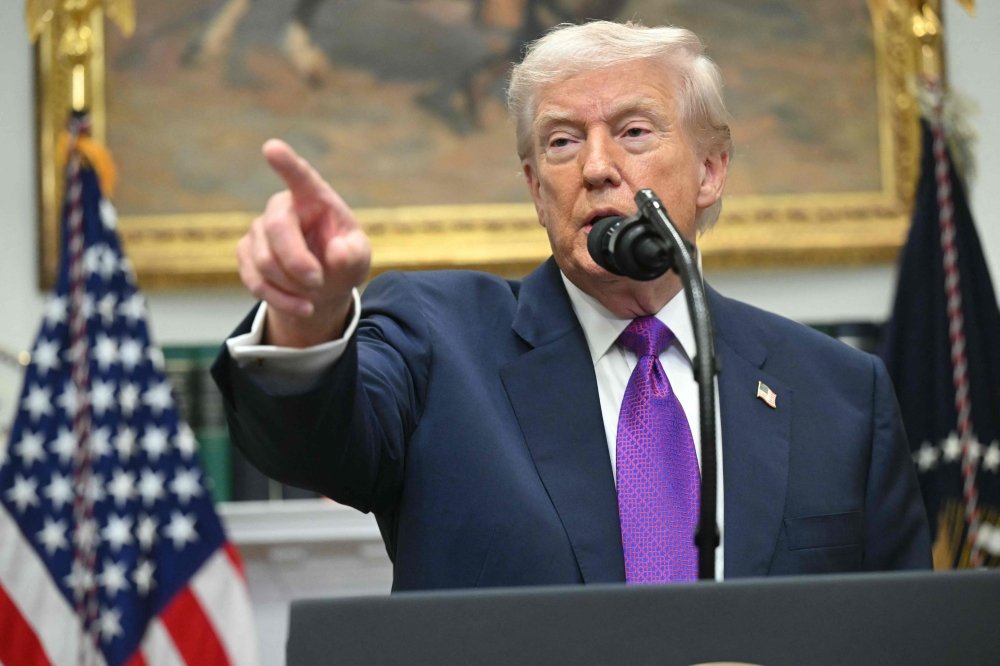
President Trump described Khamenei as “one of the most evil people in history” and framed the operation as a turning point for the Iranian people. In a statement, he urged Iranians and security forces to seize what he called “the single greatest chance” to reclaim their country.
Israeli Prime Minister Benjamin Netanyahu echoed similar sentiments, calling on Iranian citizens to unite and overthrow the regime. “This is your time to secure your future,” he said in a public address directed at the Iranian population.
Scenes Inside Tehran
Shortly after reports of Khamenei’s death began circulating, witnesses described mixed emotions on the streets of Tehran. Some residents reportedly cheered as black smoke rose over districts associated with the supreme leader’s residence. Others remained indoors as security forces quickly flooded key areas of the capital.
Loud explosions were heard throughout the night and into early morning hours, signaling continued strikes. Communications were reportedly disrupted, and internet access was limited in parts of the country.
The strikes occurred only weeks after authorities had forcefully suppressed mass protests across Iran, during which thousands were reported killed.
Regional Retaliation
Iran responded swiftly with missile and drone strikes targeting multiple locations across the Middle East. At least two people were killed in Abu Dhabi, and another fatality was reported in Tel Aviv. Several Gulf cities experienced explosions, and smoke was seen rising near US military installations in the UAE and Bahrain.
The Israeli military reported that senior Iranian figures, including Ali Shamkhani and General Mohammad Pakpour of the Revolutionary Guards, were also killed in the operation. Iranian media further reported that members of Khamenei’s family were among the casualties.
Despite the losses, Iranian officials vowed defiance. Ali Larijani, head of the Supreme National Security Council, declared that Iran would respond decisively to what he described as international aggression.
Questions of Succession
Khamenei’s death has intensified speculation about who will lead Iran next. For years, analysts had debated succession plans due to his advanced age. Many observers believe the Revolutionary Guards could gain greater influence in the political and economic structure of the country.
Reza Pahlavi, son of Iran’s former shah who was overthrown in the 1979 Islamic Revolution, called for vigilance and urged citizens to prepare for what he described as a historic opportunity for transformation. While he positions himself as a transitional figure toward secular democracy, he does not command unanimous support within opposition groups.
Khamenei was only the second supreme leader in Iran’s modern theocratic system, following Ayatollah Ruhollah Khomeini. His death signals the possible end of an era that shaped the nation for more than three decades.
Mounting Casualties
Iran’s Red Crescent reported that more than 200 people had been killed in the strikes, with over 700 injured. Authorities said a strike on a school in southern Iran resulted in more than 100 deaths, though independent verification has been limited.
In Israel, civilians sought shelter as air defense systems intercepted incoming missiles. Emergency services confirmed one fatality in the Tel Aviv area and approximately 20 injuries.
Across the Gulf, residents described fear and confusion as explosions echoed through major cities. In Bahrain, a teenage student described the terrifying sound of blasts that she said she would “never forget.”
The Strait of Hormuz, a vital shipping route for global oil supplies, was reportedly declared closed by Iran’s Revolutionary Guards, raising concerns about global energy markets and economic fallout.
A Military Operation of Unprecedented Scale
Military officials described the operation as one of the largest in Israeli air force history and the most extensive US action aimed at regime change since the 2003 invasion of Iraq.
Airspaces across Iran, Iraq, Kuwait, Syria, the UAE, and Israel were partially or fully closed. Airlines canceled flights, stranding travelers and signaling the seriousness of the crisis.
Diplomatic efforts had been underway prior to the attack, including negotiations in Geneva between US and Iranian representatives. Oman had been mediating discussions over Iran’s nuclear program and had reported progress just days before the strikes. However, tensions escalated rapidly, culminating in military action.
A Human Moment in the Midst of Crisis
Beyond the political statements and military strategies, ordinary people across the region are living through fear, uncertainty, and grief. Families are seeking safety in shelters. Parents are shielding children from the sounds of explosions. Workers are unsure whether they will return to their offices. Students are watching history unfold in real time.
While leaders speak of strategy and opportunity, it is civilians who carry the emotional weight of conflict. The future of Iran, and perhaps the stability of the Middle East, now hangs in a fragile balance shaped not only by governments but by the resilience and hopes of its people.