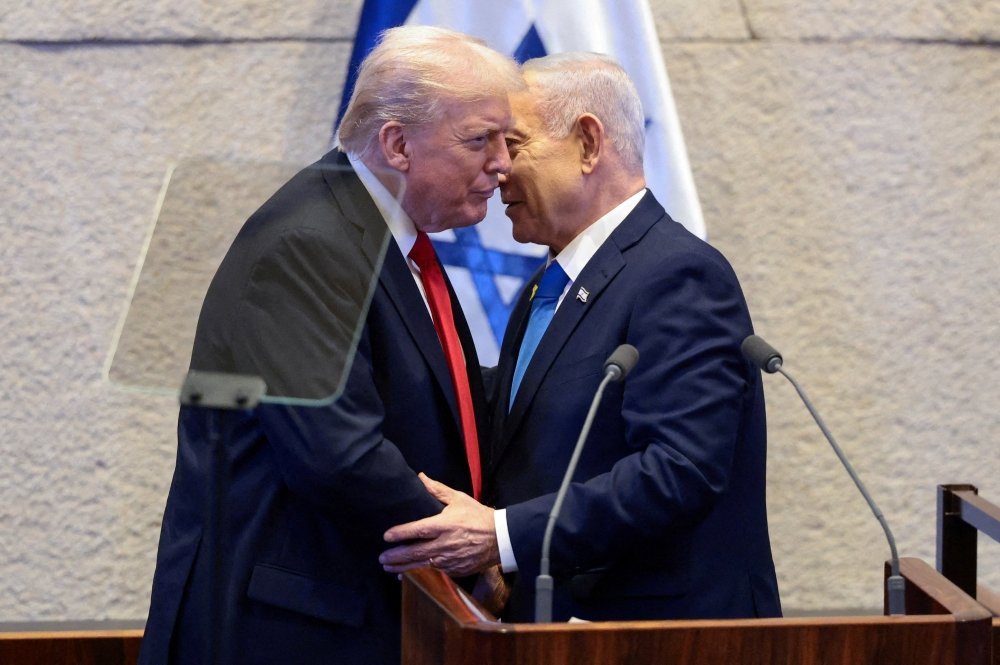
Prime Minister Benjamin Netanyahu has confirmed that Israel will participate in U.S. President Donald Trump’s newly launched “Board of Peace,” marking a significant political development during his recent visit to Washington.
Following a meeting with Secretary of State Marco Rubio, Netanyahu shared on X that he had formally signed Israel’s accession as a member of the initiative. His trip to Washington also included discussions with Trump, with Iran reportedly high on the agenda.
The “Board of Peace” was authorized under a United Nations Security Council resolution adopted in mid-November. The resolution allowed for the establishment of an international stabilization force in Gaza, where a fragile ceasefire has been in place since October. The ceasefire followed a Trump-backed plan that was accepted by both Israel and the Palestinian militant group Hamas.
Originally designed to oversee Gaza’s temporary governance during a transitional period, the board was later described by Trump as a broader global platform. He announced plans to expand its scope beyond Gaza to address wider international conflicts, positioning himself as chair of the body.
The board is scheduled to hold its first meeting on February 19 in Washington, with Gaza’s reconstruction expected to be a key topic.
However, the initiative has sparked widespread debate.
Human rights experts and legal scholars have raised concerns that a U.S.-led body overseeing the affairs of a foreign territory may resemble a colonial-style governance structure. Critics have also pointed out that the board does not currently include Palestinian representation, a factor that could intensify scrutiny following Israel’s formal participation.
International reactions have been cautious. While several Middle Eastern allies of Washington have agreed to participate, many traditional Western partners have chosen not to join. Some analysts warn that the board’s mandate could potentially overlap with or undermine the role of the United Nations in peacekeeping and conflict resolution.
Meanwhile, the ceasefire in Gaza remains fragile. Gaza health officials report that at least 580 Palestinians have been killed since the truce began, while four Israeli soldiers have reportedly lost their lives during the same period.
According to the Gaza health ministry, more than 72,000 Palestinians have been killed since Israel launched its military campaign, which it describes as self-defense following the late 2023 Hamas-led attack that killed 1,200 people and resulted in more than 250 hostages being taken. The ongoing conflict has triggered a severe humanitarian crisis, with widespread displacement and food shortages across Gaza.
Multiple rights experts, scholars, and a United Nations inquiry have characterized Israel’s actions as amounting to genocide, a claim Israel strongly rejects.
Beyond the political strategies, diplomatic language, and international resolutions, the reality on the ground remains painfully human. Families on both sides continue to grieve. Parents search for safety for their children. Communities struggle with trauma, loss, and uncertainty about what tomorrow may bring.
As world leaders debate governance structures and peace frameworks, millions of ordinary people remain caught between decisions made far from their homes. Whether the “Board of Peace” becomes a turning point toward stability or another chapter in a long conflict will ultimately be measured not by headlines — but by whether it brings real relief, security, and dignity to those living through the crisis.