The United States has begun moving a significant naval force toward the Middle East as President Donald Trump renewed sharp warnings to Iran over its nuclear ambitions and the treatment of protesters inside the country.
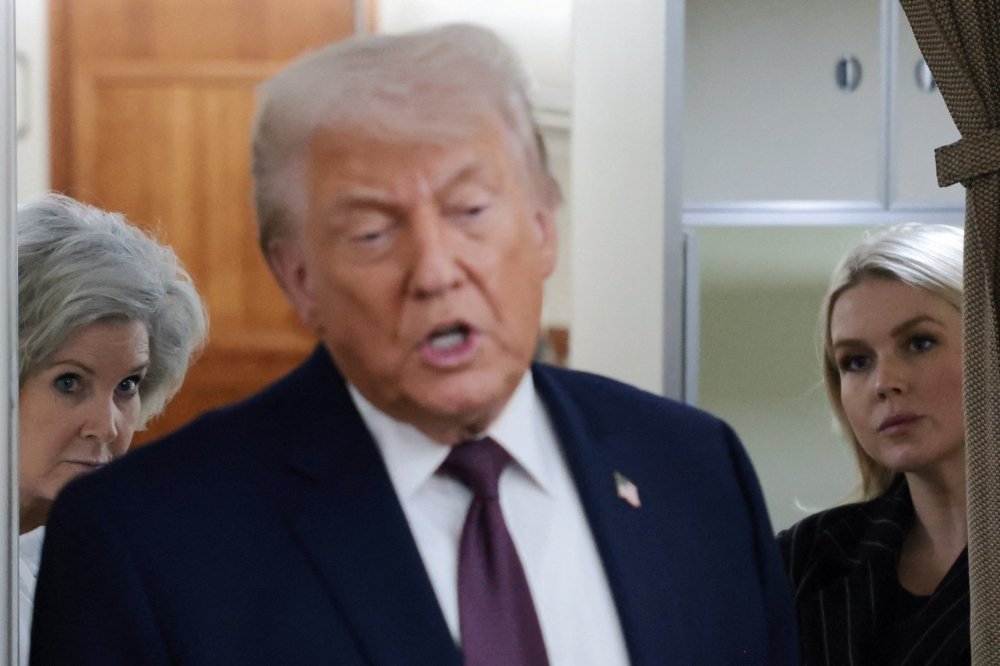
Speaking to reporters aboard Air Force One after attending meetings with world leaders in Davos, Switzerland, Trump confirmed that a large US naval presence was heading in Iran’s direction. While he stressed that he hoped force would not be necessary, he said the deployment was meant to ensure the United States was prepared for any escalation.
US officials, who spoke on condition of anonymity, said the aircraft carrier USS Abraham Lincoln along with several guided-missile destroyers are expected to arrive in the region in the coming days. Additional air-defence systems are also being considered to protect US bases from any potential Iranian retaliation.
The movement of these forces broadens the military options available to Washington, both to strengthen defences across the region and to respond swiftly if tensions worsen. Trump said the ships were being sent “just in case,” adding that the US was closely monitoring developments in Iran.
The naval deployments began shifting from the Asia-Pacific last week as relations between Washington and Tehran deteriorated further, following Iran’s harsh crackdown on protests that erupted across the country in recent months.
Trump has repeatedly warned Iran against executing protesters, claiming that his threats had forced Tehran to halt planned hangings. On Monday, he said Iran had cancelled nearly 840 executions after he issued stern warnings of severe consequences.
He described the reported decision as “a good sign,” suggesting it showed Iran was paying attention to US pressure. However, uncertainty remains over whether unrest inside the country could reignite.
At the same time, Trump reiterated his position on Iran’s nuclear programme, saying the US would strike again if Tehran attempted to restart enrichment activities following American attacks on Iranian nuclear sites in June. He warned that any renewed effort would be met with swift military action.
Iran is required to brief the United Nations’ nuclear watchdog, the International Atomic Energy Agency, on the condition of the facilities hit in the strikes and the status of nuclear material believed to be stored there. This includes hundreds of kilograms of highly enriched uranium, which experts say could be further refined into weapons-grade material. The IAEA has not verified Iran’s stockpile for several months, raising concerns among international observers.
Meanwhile, protests that began in late December as demonstrations over economic hardship in Tehran quickly spread nationwide. Human rights groups estimate thousands have been killed during the unrest, including protesters and members of the security forces, though exact figures remain disputed.
Asked about the death toll, Trump said the true number was unclear but acknowledged the scale of the violence.
Beyond military movements and political statements, this moment reflects something deeper: ordinary people caught between power struggles far larger than themselves. Behind the warships, warnings, and statistics are families grieving lost loved ones, citizens demanding dignity, and a region holding its breath, hoping that force will not become the final answer.