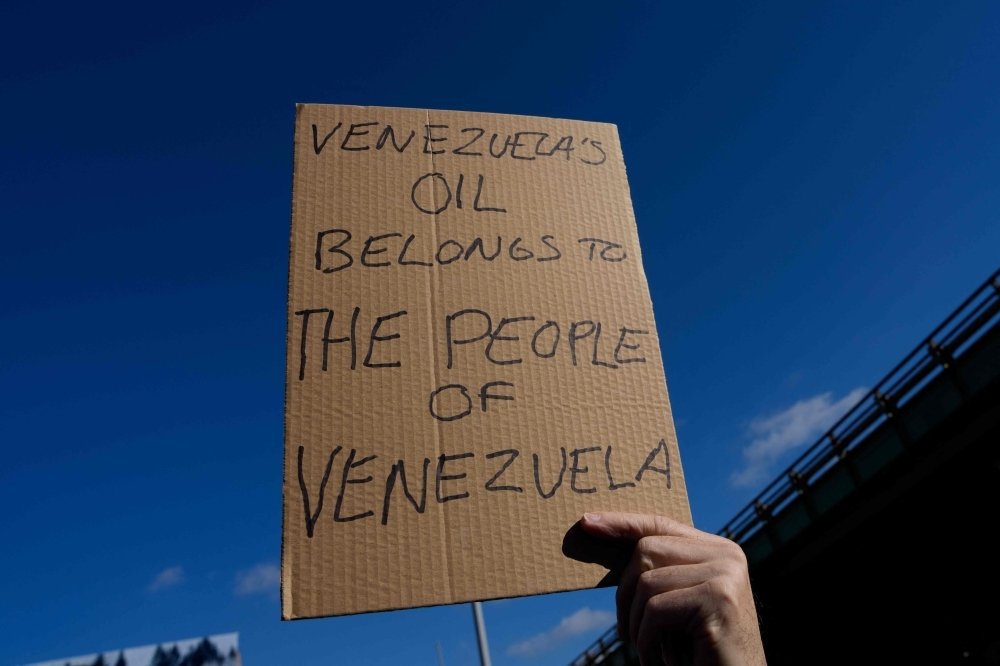
After a bold US military operation targeting Nicolás Maduro, former President Donald Trump expressed his desire to allow American oil companies to return to Venezuela to access its massive crude reserves. The move highlights the growing strategic interest of the United States in Latin America’s energy resources and the geopolitical tug-of-war over Venezuelan oil.
Venezuela’s Oil Reserves: A Global Giant
Venezuela holds the largest proven oil reserves in the world, totaling 303.2 billion barrels, according to OPEC. This surpasses even Saudi Arabia (267.2 billion barrels) and Iran. However, production remains low, with only about 1 million barrels per day currently extracted—far below the 3.5 million b/d pumped during Hugo Chavez’s early years in 1999.
Experts attribute this decline to neglect, poor infrastructure, underinvestment, and corruption. U.S. sanctions introduced in 2019 further exacerbated the crisis, driving production down to a historic low of 350,000 b/d in 2020.
Navigating Sanctions
With global restrictions in place, Venezuela has limited buyers for its oil. China accounts for roughly 80% of imports, often routing shipments through Malaysia, while Cuba receives about 5% under bilateral agreements. To bypass sanctions, Caracas uses “ghost tankers” with fake routes and flags, and cryptocurrency—mainly USDT stablecoins—to facilitate payments.
One recent example was the M/T Skipper, intercepted by the U.S. Navy while transporting over a million barrels of oil, reportedly destined for Cuba.
U.S. Companies in Venezuela
A small portion of Venezuelan oil is produced by Chevron, which operates under a special U.S. license. This allows Chevron to maintain its partnership with Venezuela’s national oil company and export some oil to the U.S. Other major American oil companies, such as ExxonMobil and ConocoPhillips, left the country in 2007 due to nationalization requirements that demanded Venezuela take a majority stake in all operations.
Why Trump Is Interested
Trump has emphasized the strategic importance of energy security for the U.S., stating, “We have to be surrounded by safe, secure countries, and we also have to have energy, very important.” He claimed that the U.S. should be “repaid” for past investments in Venezuelan oil infrastructure. Analysts note that Trump views oil exported under embargo as “stolen from the international community,” with U.S. equipment and investments playing a key role before nationalization.
The move also aims to counter Chinese influence in Latin America, including control over strategic trade routes like the Panama Canal, through which much of Venezuela’s oil passes.
Challenges Ahead
Experts warn that restoring Venezuela’s oil production would require massive investments to repair crumbling infrastructure. Current market conditions—oversupply and falling oil prices in 2025—make such investment less attractive. Analysts also point out that major U.S. oil companies are accountable primarily to their shareholders, not the government, which could slow any rapid return to Venezuelan oil projects.
Potential Market Impact
Given a well-supplied global oil market, instability in Venezuela is unlikely to drastically alter prices, though minor fluctuations are possible due to logistical disruptions. Analysts suggest that broader concerns, such as Trump’s tensions with Iran and global conflicts affecting oil supply, could have a more significant impact.
While the situation is complex and uncertain, it reflects the intertwined nature of geopolitics, energy security, and international business interests, showing that the oil beneath Venezuela’s soil is as much about strategy as economics.