Venezuela has responded defiantly to fresh pressure from the United States, insisting that its crude oil exports remain unaffected despite President Donald Trump’s announcement of a sweeping blockade targeting oil tankers linked to the country.
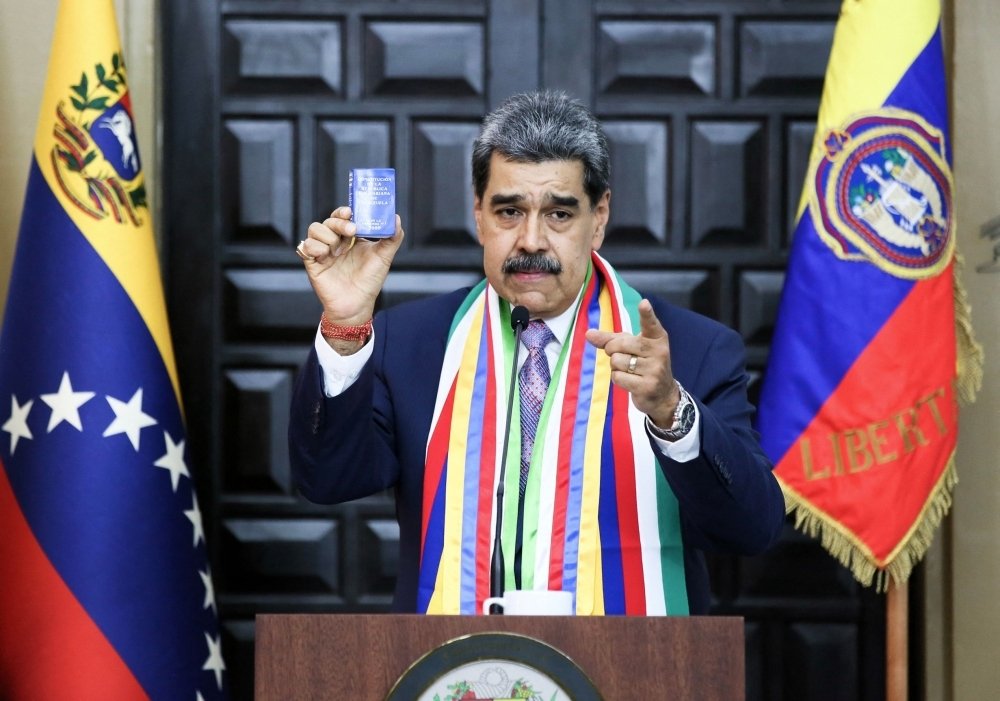
Trump’s statement, delivered on Tuesday, represents a sharp escalation in his long-running campaign of political, economic, and military pressure against Venezuela’s leftist government led by President Nicolas Maduro. He warned of what he described as a “total and complete blockade” of all sanctioned oil tankers entering or leaving Venezuelan ports.
Despite the strong rhetoric, Venezuelan authorities say oil operations are continuing without disruption. The state-owned oil giant Petroleos de Venezuela, commonly known as PDVSA, confirmed that export activity remains stable.
“Export operations for crude and byproducts continue normally. Oil tankers linked to PDVSA operations continue to sail with full security,” the company said in an official statement.
Venezuela holds the world’s largest proven oil reserves and relies heavily on petroleum exports to sustain its struggling economy. Officials in Caracas portrayed Trump’s comments as political posturing rather than an immediate operational threat.
Trump reinforced his position by pointing to the extensive US military presence in the Caribbean, including the deployment of a major aircraft carrier. He claimed Venezuela was “completely surrounded” and vowed that US forces would prevent unauthorized tanker movements.
He also repeated accusations that Venezuela had taken “all of our oil,” a reference to the nationalization of the country’s energy sector that took place years ago under previous Venezuelan leadership.
In response to what it describes as an escalation of threats, President Maduro held telephone talks with United Nations Secretary-General Antonio Guterres. During the conversation, Maduro raised concerns about the impact of US actions on regional peace and stability.
Guterres urged both sides to exercise restraint and work toward de-escalation, emphasizing the need to preserve stability across Latin America and the Caribbean.
“We Are Not Intimidated”
The Venezuelan military echoed the government’s defiant tone, stating that it was “not intimidated” by Washington’s warnings. Trump’s strategy is widely seen as an attempt to weaken Maduro’s domestic support by intensifying economic hardship, but Caracas has framed the pressure as an attack on national sovereignty.
China, Venezuela’s primary oil customer, also weighed in. In a phone call between foreign ministers, Beijing expressed support for Caracas and criticized what it described as unilateral coercion.
“China opposes all unilateral bullying and supports all countries in defending their sovereignty and national dignity,” China’s foreign minister said.
Tensions have been rising since the recent seizure of the oil tanker M/T Skipper, an operation involving US personnel descending from a helicopter. The move marked a significant shift in Washington’s approach and added fuel to fears of a broader confrontation.
Earlier this year, the US ordered its largest military deployment in the Caribbean since the 1989 invasion of Panama, officially citing anti-drug operations. However, Venezuela argues that these missions are a pretext for targeting its government and oil resources.
US operations against suspected drug-smuggling vessels in the region have resulted in dozens of deaths, further intensifying criticism from Caracas and concern among neighboring countries.
Mexican President Claudia Sheinbaum called on the United Nations to take a more active role, warning that silence could lead to bloodshed and wider instability.
Oil as a Lifeline
Since 2019, Venezuela has been subject to a US oil embargo, forcing it to sell crude at discounted prices, mainly to Asian markets. Oil production has fallen dramatically, from more than three million barrels per day in the early 2000s to around one million today.
Economic analysts warn that a full blockade could deal a severe blow to Venezuela’s already fragile economy. Capital Economics noted that such measures could cut off one of the country’s last remaining lifelines, at least in the short term.
The longer-term impact, analysts say, will depend on how far Washington is willing to push and whether diplomatic channels can still prevent further escalation.