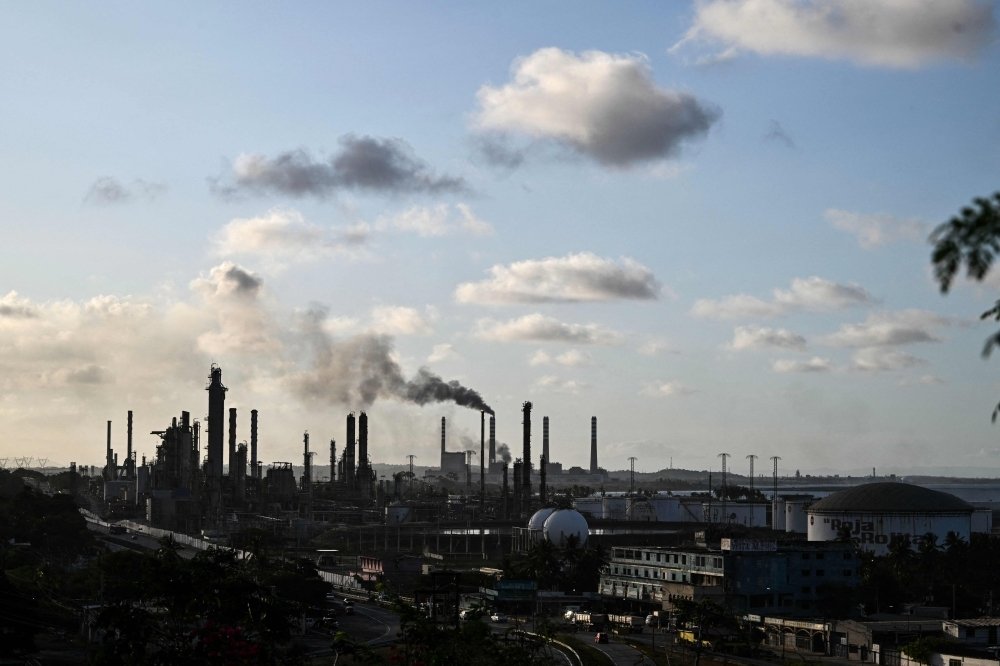
Venezuela has taken a decisive step toward reshaping its economic future by moving to reopen its long-closed oil sector to private investors, including major United States energy companies. Lawmakers in Caracas have given initial approval to a reform bill that could reverse decades of strict state control and mark a dramatic shift in the country’s relationship with Washington.
The move comes less than three weeks after the dramatic ouster of longtime leader Nicolas Maduro. In a first reading, parliament backed legislation that would allow private firms to independently explore and extract oil, a major departure from the socialist-era framework that dominated Venezuela’s energy industry for nearly two decades.
If passed in a second vote, the bill would dismantle rules imposed during the mid-2000s under former president Hugo Chavez, which required private companies to operate only through joint ventures in which the state oil giant PDVSA held a controlling stake. Supporters argue that those policies discouraged foreign investment and contributed to a steep decline in oil output.
The reform push is being led by acting president Delcy Rodriguez, once a close ally of Maduro, who has moved quickly to thaw relations with the United States. Her approach has drawn praise from US President Donald Trump, who described her leadership as “very strong” and claimed that the United States is already benefiting from Venezuela’s oil revenues.
Trump framed the developments as a win for both nations, saying improved cooperation would help strengthen the US economy while giving Venezuela a chance to recover from years of economic hardship. “Venezuela’s going to do better than they’ve ever done,” he said, adding that the gains could ultimately lower taxes back home.
Diplomatic ties are also warming. Washington has confirmed Laura F. Dogu, a seasoned diplomat and former ambassador to Nicaragua and Honduras, as the new charge d’affaires to Venezuela. The appointment is widely seen as a step toward restoring full diplomatic relations, which were severed in 2019 after Maduro’s disputed reelection.
Within days of Maduro’s capture in Caracas earlier this month, US officials traveled to the Venezuelan capital to discuss reopening the American embassy. A senior US official has since said that Rodriguez is expected to visit the United States soon, even though she remains under certain US sanctions.
Economically, Rodriguez’s government has already taken visible steps. This week, it directed 300 million dollars from a US-brokered oil sale into stabilizing the bolivar, Venezuela’s battered national currency. Even before the funds were fully deployed, the anticipation alone pushed down the dollar’s value on the local market, offering temporary relief to businesses and households.
Still, economists caution that lasting stability will require sustained foreign investment and a steady flow of hard currency. Despite holding the world’s largest proven oil reserves, Venezuela’s production has fallen sharply, from more than three million barrels per day in the early 2000s to roughly 1.2 million today.
Parliament speaker Jorge Rodriguez, the acting president’s brother, summed up the urgency during debate on the bill. Keeping oil underground, he argued, benefits no one. Every day without reform, he said, is another lost opportunity to use resources that could revive the economy.
Beyond economics, Rodriguez faces pressure to show real change on human rights. In recent weeks, her administration has released dozens of political prisoners, including Rafael Tudares, the son-in-law of opposition leader Edmundo Gonzalez Urrutia. Gonzalez Urrutia, now in exile in Spain, is widely viewed by his supporters as the true winner of Venezuela’s 2024 election.
The regional impact is also being felt. Since Maduro’s fall, Trump has intensified pressure on Cuba, a long-time ally of Caracas, vowing to cut off oil supplies that Havana has relied on for years. Cuban President Miguel Diaz-Canel confirmed that he spoke with Rodriguez by phone to express support and solidarity.
For ordinary Venezuelans, these shifts carry cautious hope. Years of shortages, inflation, and political fear have left deep scars. As the country opens its doors to foreign investment and reconnects with the world, many are watching closely, not for promises or headlines, but for signs that daily life might finally begin to improve.