
The United States has moved to deny visas to a former European Union commissioner and four civil society figures, escalating tensions with Europe over how social media platforms should be regulated.
In a statement released yesterday, the US State Department said the individuals were being barred for attempting to pressure American technology companies into censoring opinions they disagree with. According to Washington, these actions amount to foreign efforts to influence free expression on platforms owned and operated by US companies.
“These radical activists and weaponised NGOs have advanced censorship crackdowns by foreign states — in each case targeting American speakers and American companies,” the department said.
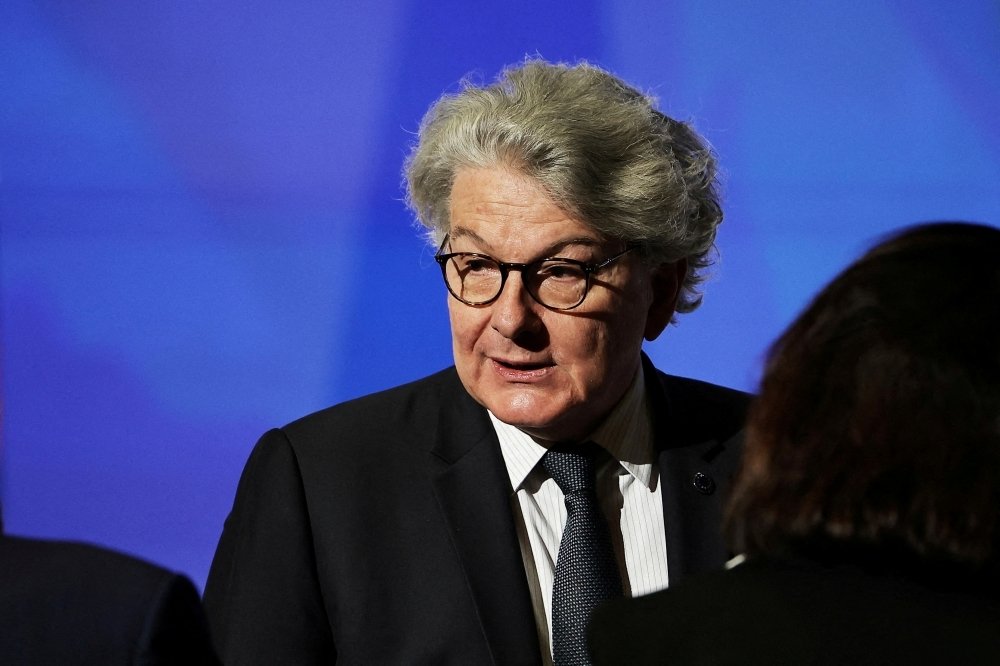
At the centre of the decision is Thierry Breton, the former European Commission official responsible for digital policy and a frequent critic of major technology leaders, including Elon Musk. Breton played a key role in shaping the European Union’s Digital Services Act, legislation that sets strict standards for how large online platforms handle content moderation, transparency, and user safety.
The US government described Breton as the chief architect of the DSA, a law that has become highly controversial in American political circles. Many US conservatives argue that the legislation enables censorship of right-leaning views beyond Europe, a claim the EU strongly rejects.
Supporters of the DSA say its purpose is not to silence opinions but to create accountability. The law requires platforms to explain moderation decisions, disclose advertising practices, and allow researchers to study issues such as children’s exposure to harmful content online.
Breton, who stepped down from the European Commission in 2024, reacted sharply to the visa ban. Writing on X, he called the move a “witch hunt” and compared it to the McCarthy era in the United States, when officials were targeted over alleged ideological loyalties. He added that censorship, in his view, is not occurring where US officials believe it is.
Tensions between Washington and Brussels have intensified in recent weeks. Earlier this month, EU regulators fined Musk’s platform X for breaching DSA rules related to advertising transparency and user verification. The US government responded by warning that European companies could face consequences, naming firms such as Accenture, DHL, Siemens, Mistral, and Spotify.
The visa restrictions also apply to Imran Ahmed, head of the Centre for Countering Digital Hate, an organisation that challenges online hate and misinformation and has previously clashed with Musk. Two representatives of the German group HateAid, Anna-Lena von Hodenberg and Josephine Ballon, were also included. The State Department said HateAid acts as a “trusted flagger” under the DSA, helping authorities identify content that may breach the law. Clare Melford, leader of the UK-based Global Disinformation Index, was also named.
Beyond the EU, Washington is now openly criticising the United Kingdom’s Online Safety Act, which mirrors several aspects of the DSA. Last week, the White House paused a technology cooperation agreement with Britain, citing concerns over the UK’s regulatory approach.
US Secretary of State Marco Rubio said the administration’s stance is rooted in protecting national sovereignty. He stated that policies which, in Washington’s view, extend foreign regulation into American speech and digital spaces will not be accepted.
As governments on both sides of the Atlantic dig in, the dispute highlights a deeper global divide: how to balance free expression, platform responsibility, and state authority in the digital age. For everyday users, this debate is no longer abstract. It directly shapes what people see, share, and say online — and who ultimately decides where the boundaries lie.